Coding & Technology

Drone Piloting & Coding

Take flight with hands-on aerial robotics through safe piloting, flight science, spatial reasoning, teamwork, and introductory coding.

Grades 3–8The mission difficulty, coding depth, and flight responsibilities are adapted for the group and program length.

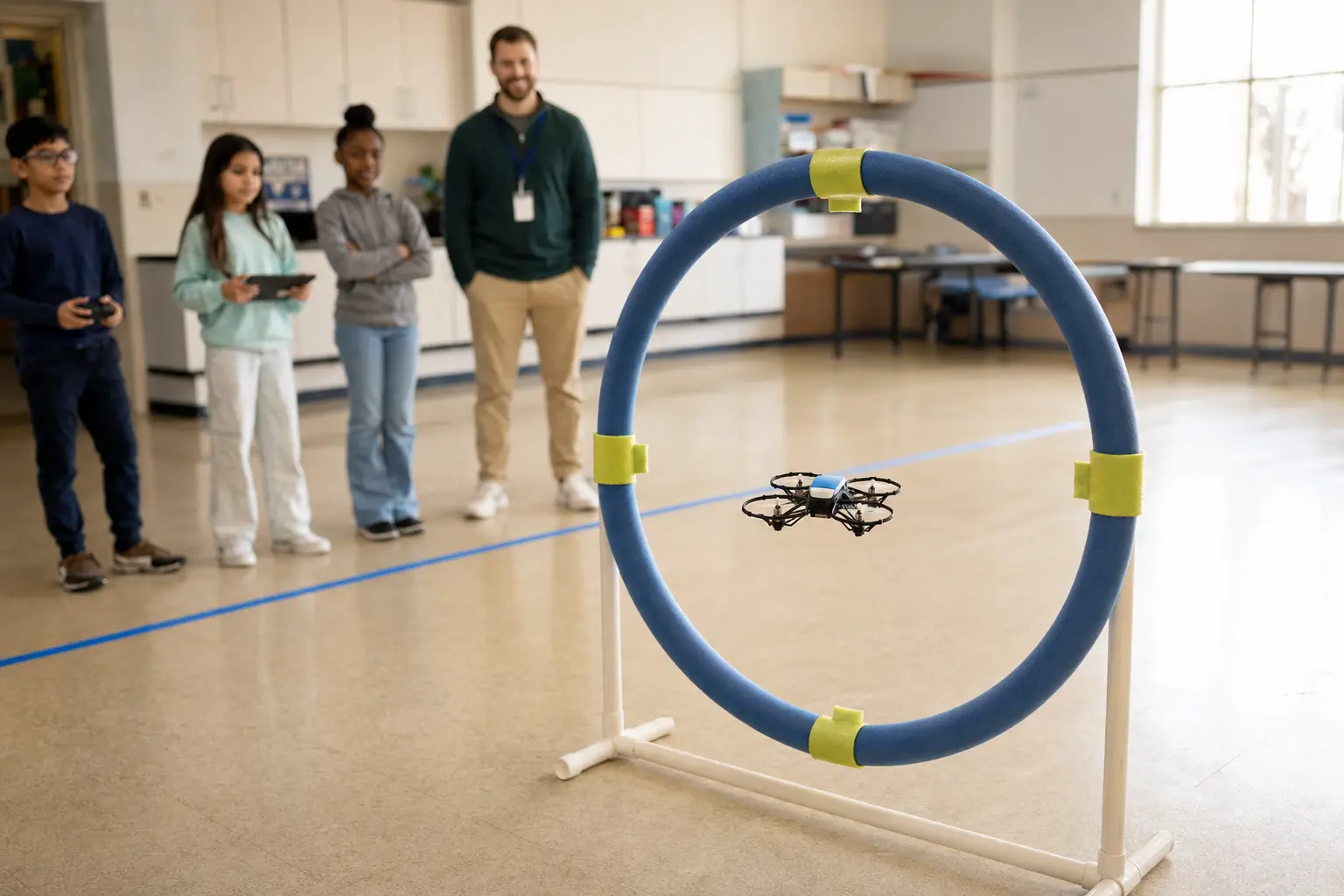
Students and an instructor observing a microdrone in a marked indoor flight area

Course description

What students make and do

Students learn to operate microdrones within a structured indoor flight zone, then connect piloting to the science and code behind flight. They practice takeoff, hovering, landing, spatial orientation, and obstacle navigation; investigate lift, thrust, balance, sensors, and center of mass; and progress from sequenced commands to planned or autonomous missions. Assigned flight roles, safety lines, and test-and-revise routines help every student participate responsibly.

  • Create a flight plan and map a route before takeoff
  • Practice controlled takeoffs, hovering, turns, and target landings
  • Navigate obstacle gates and complete multi-point flight missions
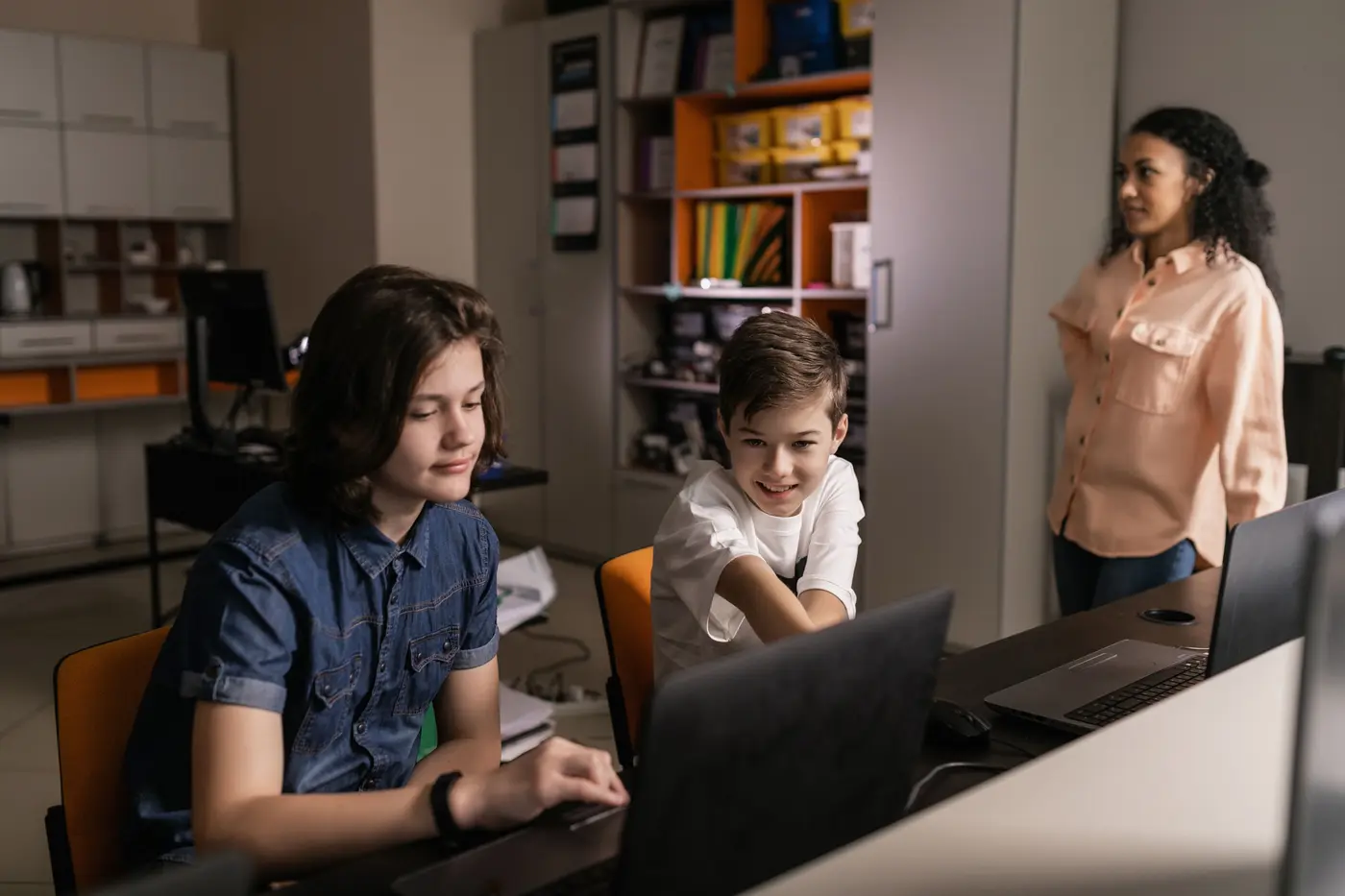
  • Code movement sequences and debug autonomous routes
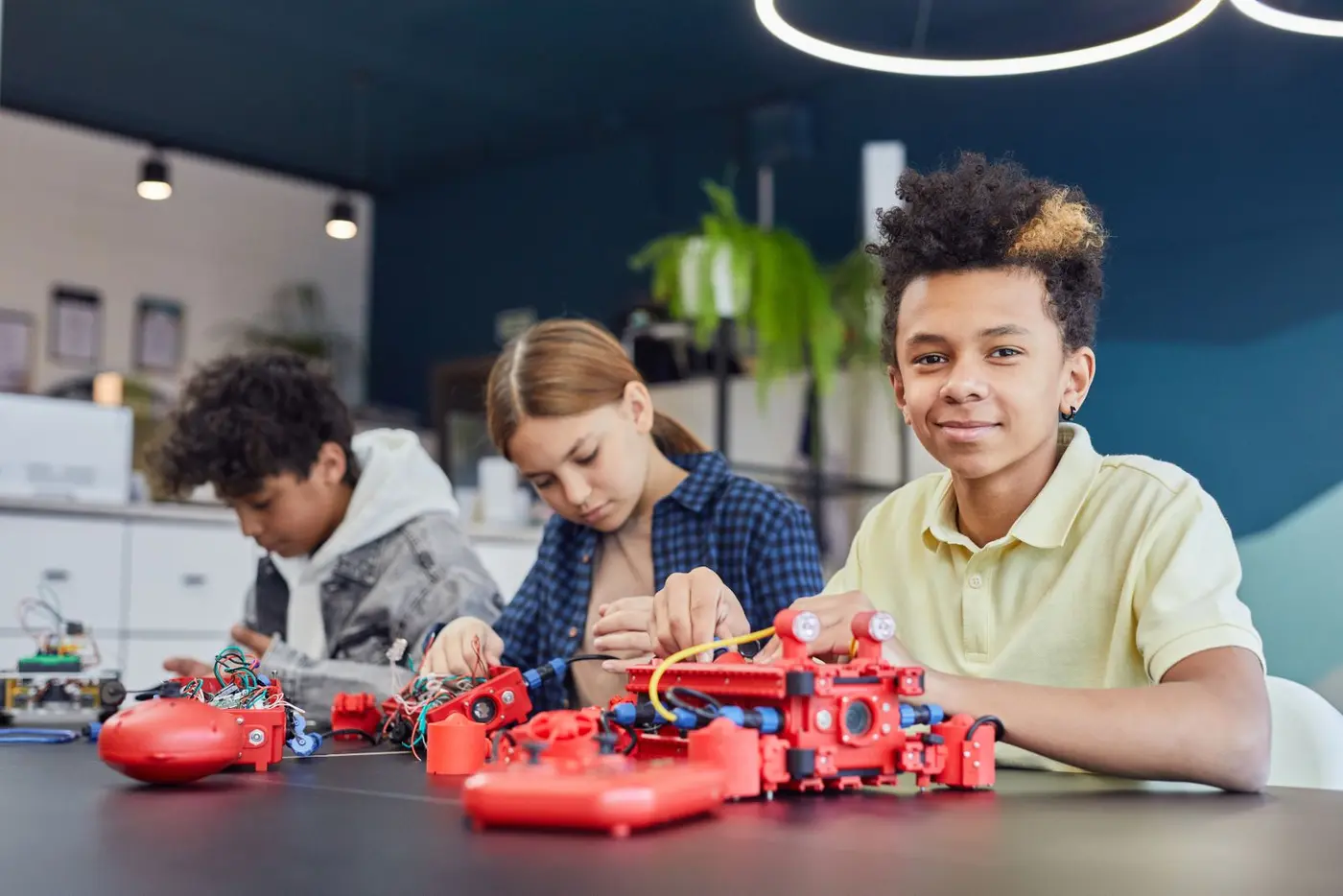
  • Build and test propeller, payload, or model-drone designs
  • Complete a safety-focused capstone flight challenge

Sample program path

How the course can develop

This example reflects Athena's existing drone curriculum. The order and depth change with the group, room, equipment, and contract.

  1. 01Learn drone parts, flight forces, safety rules, and offline mission planning
  2. 02Investigate sensors, symmetry, balance, payloads, and debugging
  3. 03Begin drone-specific coding with sequenced movement commands
  4. 04Practice controller setup, takeoff, hovering, turns, and landing
  5. 05Fly precision missions through targets, gates, and planned routes
  6. 06Combine piloting, coding, and safety in a capstone mission

How we adapt it

Adapted for age, experience, and schedule.

Beginners start with offline flight plans, wide targets, and guided controller practice. Younger or less experienced groups use shorter routes and block-based sequences; older or more advanced students can add coordinates, loops, conditionals, autonomous flight, flight logs, and recreational aviation-safety content. Short formats emphasize safe piloting and flight science, while longer programs add engineering models, coding, and a capstone mission.

Program logistics

What Athena brings and what the site provides.

What Athena brings

  • Instructor and safety-focused drone curriculum
  • Programmable microdrones, controllers, batteries, and charging equipment for the agreed class
  • Flight-zone markers, obstacle-course materials, and core STEM supplies
  • Coding devices or device support when included in the program plan
  • Onboarding and ongoing program support

What the site provides

  • A clear indoor flight area with enough room to establish a safety line
  • Reliable Wi-Fi and a projector or display for coding lessons
  • Power access and secure equipment storage

The exact drone fleet, room, device plan, enrollment, safety procedures, and any certification component are confirmed with the host before launch.

For families

Saw this program in a school or community listing?

Enrollment is usually handled by the organization hosting the class. Use the registration link in the listing you received. If you cannot find it, contact Athena with the program name and location. We will help identify available opportunities.

Ask about local opportunities

Keep browsing

More in Coding & Technology

Full catalog

Planning a program?

Tell us what you have in mind.

Tell us about your schedule, grade levels, and goals. We’ll help you find a practical starting point.

Contact Athena